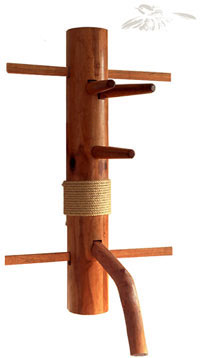

A punch is easy to see when it starts from far away. The harder problem begins when an opponent is already within arm’s reach, pressing into your structure, grabbing, pummeling for position, or changing angles faster than your eyes can organize the information. Sensitivity drills for martial artists train the ability to read pressure, direction, balance, and intent through contact.
For Wing Chun practitioners, this is not a mystical skill or a replacement for awareness. It is a trained response to physical information. When your forearms, hands, and stance can recognize a change in force, you waste less time guessing. You can protect your center, regain position, create an angle, and apply a direct response with better timing.
What Sensitivity Training Actually Develops
Tactile sensitivity is often misunderstood as simply keeping the hands moving during Chi Sao. The rolling pattern has value, but it is only one training vehicle. The real objective is to develop reliable reactions once contact has been established.
A good drill teaches several things at once: how to maintain structure under pressure, how to avoid chasing an opponent’s hands, how to feel when force is committed, and how to use the legs and hips rather than arm strength alone. It also teaches restraint. If you react to every small movement with a large motion, you create openings and lose your base.
Sensitivity is most useful at close range, where visual reaction time is limited and both people may be fighting for inside position. A skilled practitioner does not need to predict every attack. They learn to maintain a stable frame, receive pressure without collapsing, and respond when an opening is genuinely available.
Sensitivity Drills for Martial Artists Start With Structure
Before training fast reactions, build a body position that can receive force. Stand in a balanced Wing Chun stance with the knees relaxed, weight organized through the feet, and the spine upright rather than leaning into your partner. Keep the shoulders loose. Tension in the shoulders often travels down the arms and makes your hands slow, heavy, and easy to manipulate.
Your elbows should not drift wide away from your body. An elbow that stays connected to the centerline helps protect your space and gives your forearm a stronger path for directing pressure. This does not mean freezing the elbows in one position. It means moving them with purpose rather than allowing them to be pulled out of structure.
Begin every contact drill at low intensity. If both partners are trying to win from the first second, the drill becomes a strength contest. The person with more size, speed, or aggression may dominate the exchange without either person learning much. Sensitivity develops when the pressure is clear enough to feel and controlled enough to study.
Single-Hand Contact and Direction Changes
Start with one forearm touching your partner’s forearm. One person applies light forward pressure, then changes direction gradually: inward, outward, upward, downward, or slightly off-line. The receiving partner maintains contact and adjusts the position of the elbow, wrist, and stance without swatting or grabbing.
The purpose is not to force the partner’s arm away. It is to recognize where the pressure is going and redirect it with the smallest effective adjustment. If pressure comes inward, meet it with structure rather than pulling back. If it drops, avoid collapsing forward. Let the legs and body position support the hand.
After a few minutes, add a simple response. When the partner’s pressure creates an opening toward the center, the receiving partner can place a controlled palm strike or straight punch to a target pad or chest protector. The strike should arrive because the path is open, not because the drill demands a strike every time.
Rolling Hands With a Purpose
Chi Sao rolling is valuable when it is treated as a laboratory for position, pressure, and timing. It becomes less useful when students only memorize the rhythm and wait for a familiar sequence. Keep the roll relaxed and consistent, then give one partner a specific objective, such as finding an inside line, clearing an arm, or applying forward pressure without lifting the shoulders.
The other partner’s job is not to resist every action. They should recognize the change, preserve the center, and use an appropriate response. Sometimes that response is a redirection. Sometimes it is a step. Sometimes it is a clean strike line. If the partner has gained a strong angle, forcing the original position back may be the wrong choice.
A productive round includes pauses. Stop when someone loses balance, overcommits, crosses their hands, or disconnects from their stance. Briefly identify what happened, reset, and continue. This is how a repetitive exercise becomes technical training.
Sticky Feet and Base Control
Hand sensitivity alone is incomplete. At close range, the opponent’s foot position, hip line, and balance determine whether your hand control has real effect. Sticky-feet drills teach you to notice pressure through the legs while maintaining a safe, stable stance.
Begin with light foot-to-foot or shin-to-shin contact, depending on the drill and the experience level of both partners. One person shifts weight, steps slightly off line, or attempts to disrupt the other person’s base. The receiving partner follows the pressure with controlled footwork instead of stiffening or hopping backward.
The goal is not to sweep each other hard. It is to understand when the opponent is heavy on one leg, when their weight has shifted too far forward, and when an angle can be created. Pair this with simple upper-body contact and the lesson becomes clear: control of the arms is stronger when it affects the opponent’s base.
Add Footwork Before Adding Speed
A common mistake in sensitivity training is staying rooted in front of the partner for too long. Wing Chun close-range skill is not just about maintaining contact. It is about using contact to find a better position.
Practice a simple drill where both partners begin with forearm contact. One partner applies pressure and steps slightly to either side. The other partner must keep the center protected while turning, stepping, or shifting to maintain alignment. At first, the movement should be slow enough that both people can feel whether the step improves their structure or leaves them crossed and vulnerable.
As skill improves, add controlled entries, angle changes, and short strikes. Do not add speed until the mechanics remain recognizable. Fast, disorganized training can build confidence, but it often builds the wrong habits. A smaller practitioner especially benefits from learning how angle, timing, and body position reduce the need to overpower an opponent.
Pressure Testing Without Losing the Lesson
Sensitivity drills need progressive resistance. If a partner always gives the same pressure and same opening, your response may look sharp but fail when the situation changes. On the other hand, turning every round into a fight can remove the precision that makes the drill worthwhile.
A useful progression moves from cooperative movement to limited resistance, then to variable resistance. In a limited round, for example, one partner may only attempt to clear the line and strike with a straight punch while the other works on contact control and angle creation. This gives both people a clear problem to solve.
Protective equipment can be useful when strikes are added, especially as intensity rises. Keep the power controlled and the objective specific. Technical training should improve judgment, not reward reckless exchanges. If either partner cannot maintain control, lower the speed and return to the earlier version of the drill.
Common Errors That Slow Progress
The first error is using excessive muscle. Tight arms may feel secure, but they reduce the ability to feel subtle changes and make transitions slower. The second is chasing hands. When you follow every movement, you often give up your center and allow the opponent to lead your structure.
Another problem is treating contact as a guarantee of control. Contact gives information, not automatic dominance. An opponent can change levels, pull away, strike with the other hand, or step to a different angle. Good sensitivity must work with awareness, footwork, distance management, and direct striking mechanics.
Finally, do not confuse complicated motions with advanced skill. The best response is often simple: maintain position, redirect the force, step to a stronger line, and apply a direct action when the target is available.
Train Sensitivity With the Right Partner
Sensitivity training works best with partners who can give honest pressure without turning every exchange into an ego contest. Beginners need enough cooperation to understand what they are feeling. Experienced students need unpredictable movement and resistance to test whether their mechanics hold up. Both need control and mutual respect.
At South Florida Wing Chun Kung Fu Academy, students develop tactile reactions alongside striking, arm control, and footwork because close-range fighting rarely gives you only one problem at a time. The hands may be engaged, the opponent may be driving forward, and the feet may need to move immediately.
The practical value of these drills is not that they make you react without thought. It is that they give you better information under pressure. Train patiently, keep your structure honest, and let each repetition teach your body how to find balance, position, and a direct path forward. If you want to experience that training in person, come join us today and try out a free class.